Installations
Metamorphose II
The Greek philosopher Eubulides of Miletus is credited with the sophistic argument known as the paradox of the sorites (heap). The most common way it is formulated is as follows: the first grain does not constitute a heap, neither does the second, and so on; thus, either the heap never forms, or if it is accepted that it forms by the addition of a given grain, it must be concluded that it was that single grain that made the heap exist.
The famous Dutch illustrator and engraver Maurits Cornelis Escher was a great master in the graphic representation of various mathematical and logical themes and paradoxes. Metamorphose II, from 1940, is one of his works that best embodies the theme of the paradox of the sorites.
This is the work I have chosen to set to music. When does a polygon stop being a polygon and start being the two-dimensional representation of a lizard, or a fish, or a bird, and vice versa? If Escher graphically represented this theme, my work has been to transpose it musically. When does a melody, a timbre, or a key stop being what it is and become something else?
Please, enjoy the listening and viewing experience!
La Petite Chaise
A merged interactive performance within a multimedia installation that explores the significance of memories and nostalgia through an evocative dialogue with the audience.
The exhibition
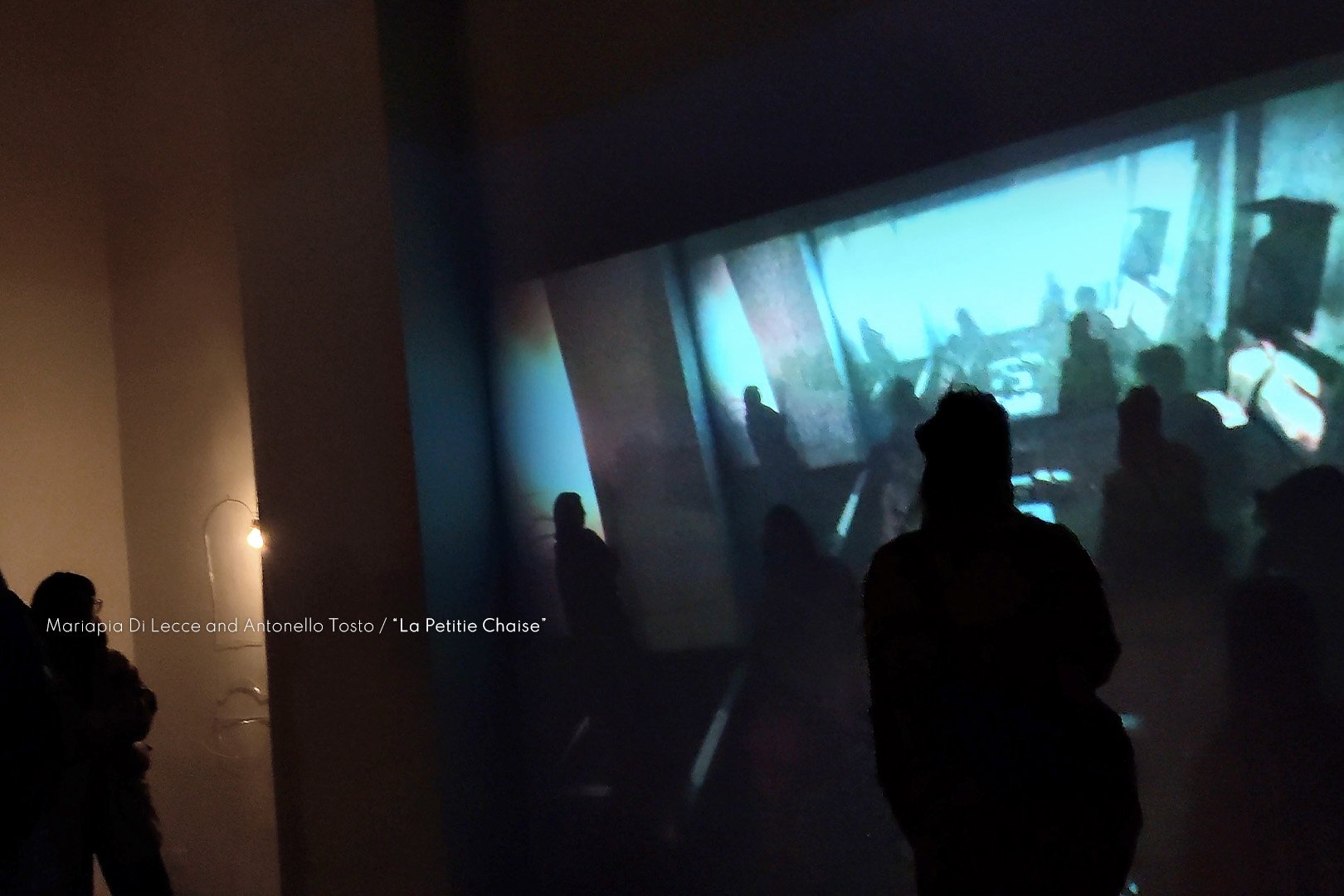
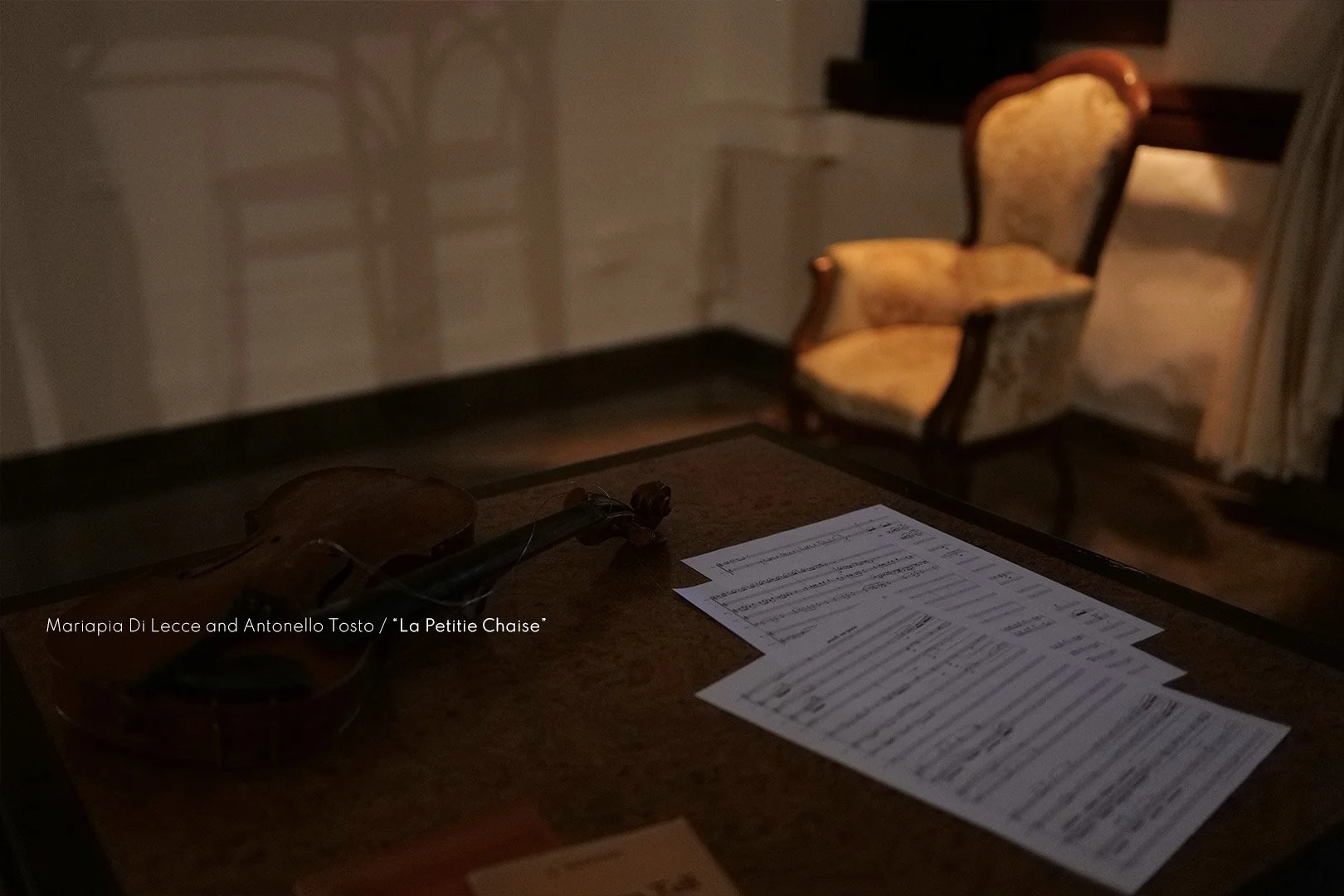
"La Petite Chaise" was presented at the Cavallerizza Reale in Turin, hosted by Paratissima. The event was part of the "Salone OFF" program of the Salone del Libro di Torino, International Book Fair 2023.
The work offers a profound reflection on the meaning of memories and nostalgia, actively involving the audience in an evocative dialogue.
Memory is like a shadow, it is and it isn't simultaneously. Its presence is constant, yet constantly intangible.
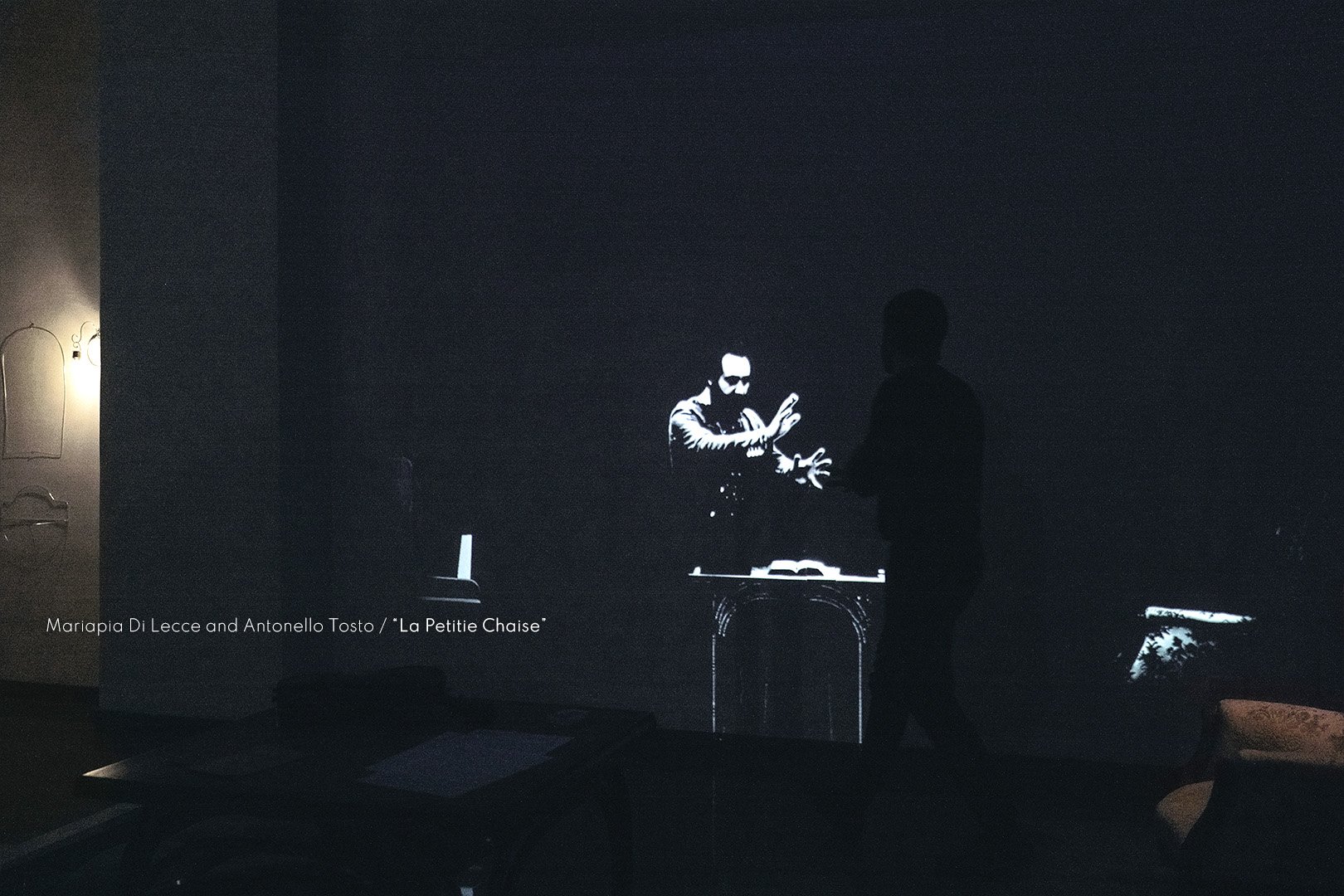
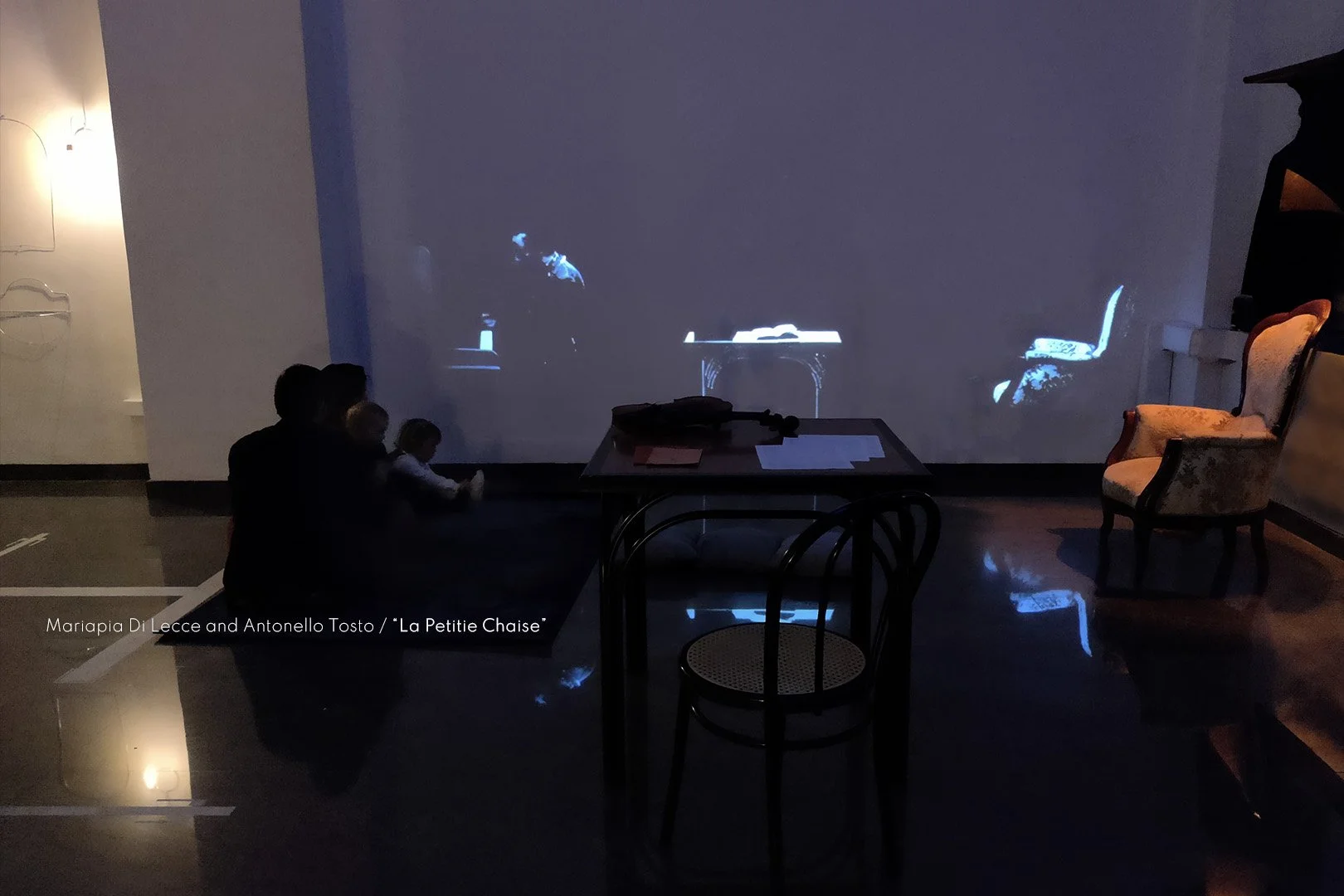
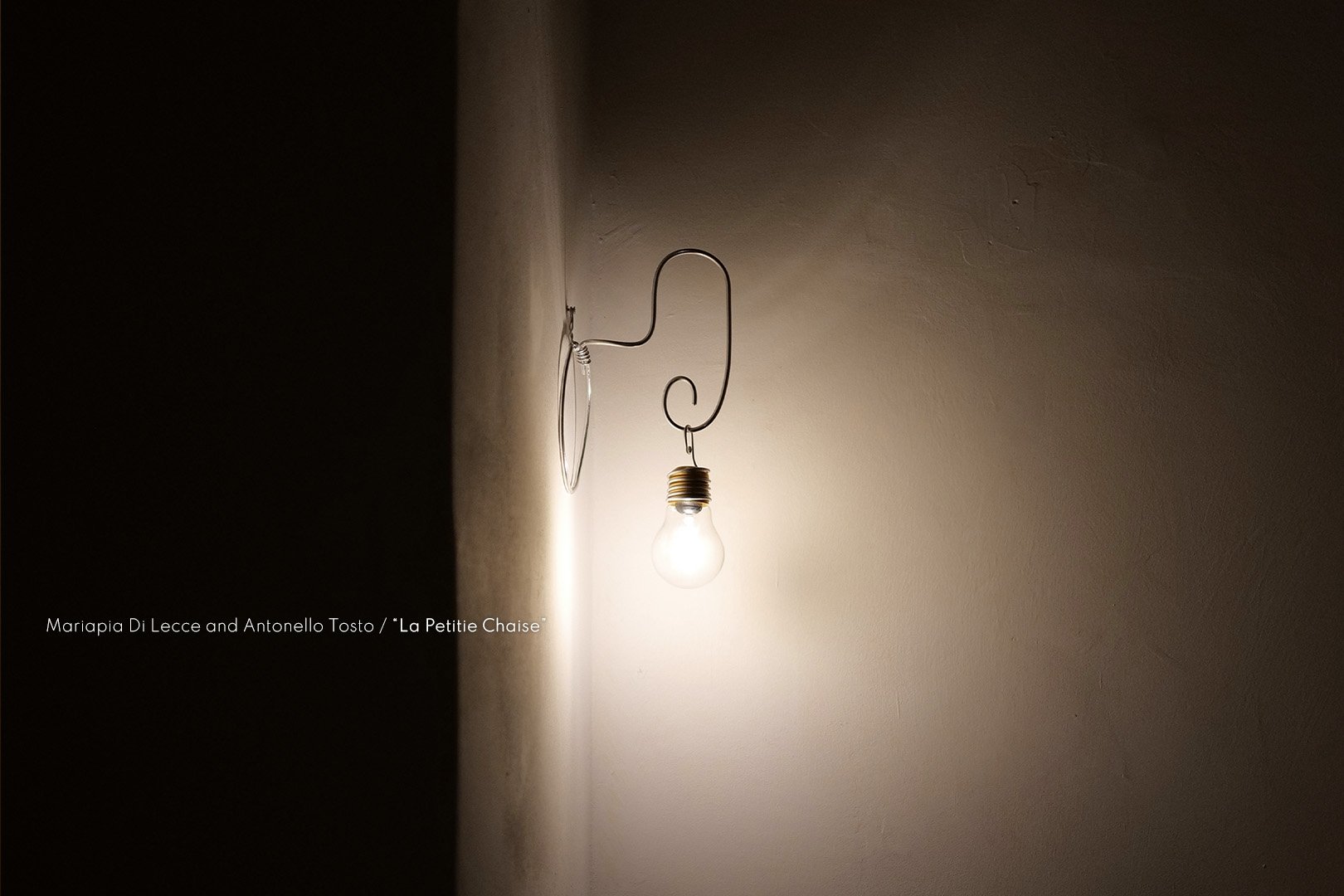
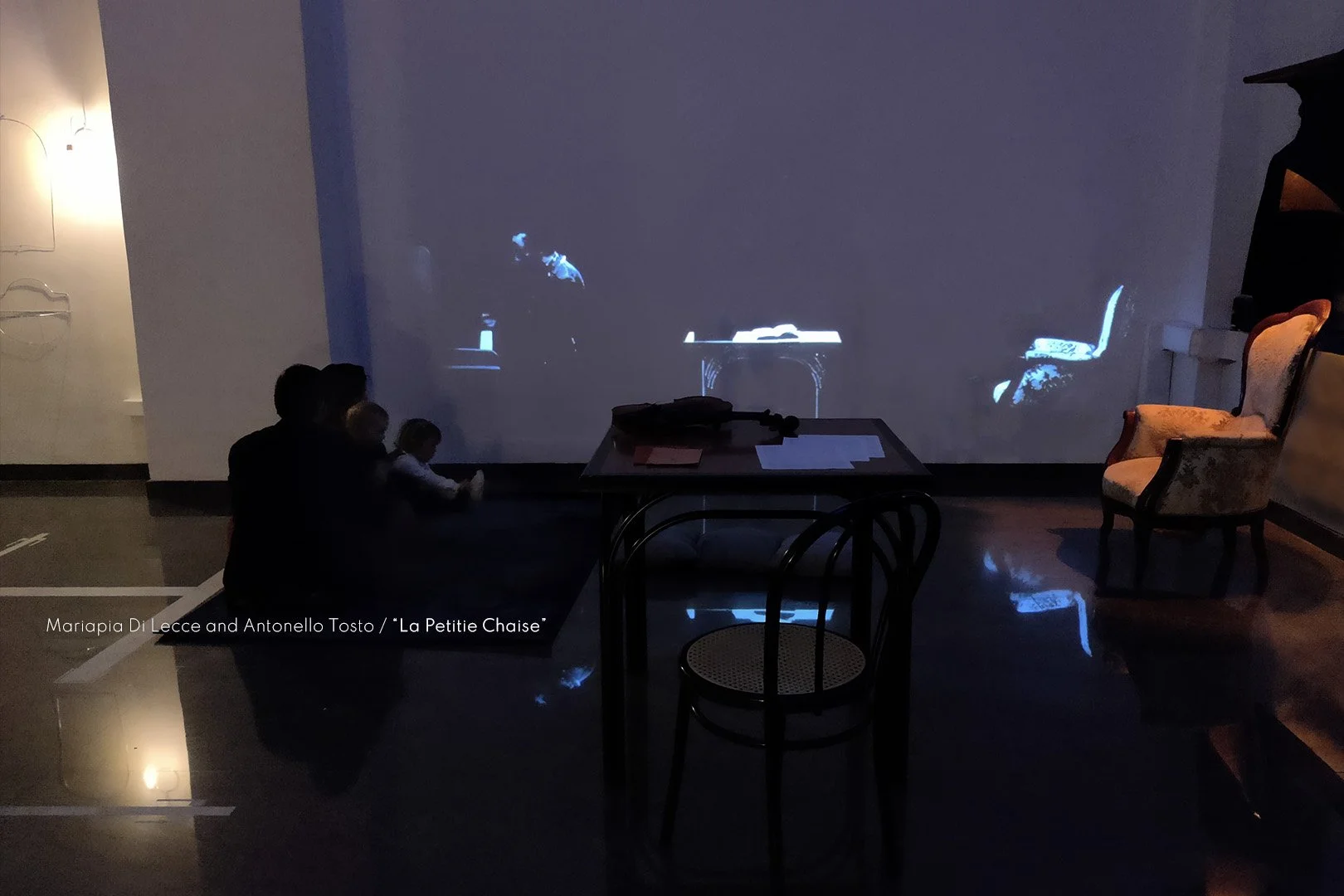
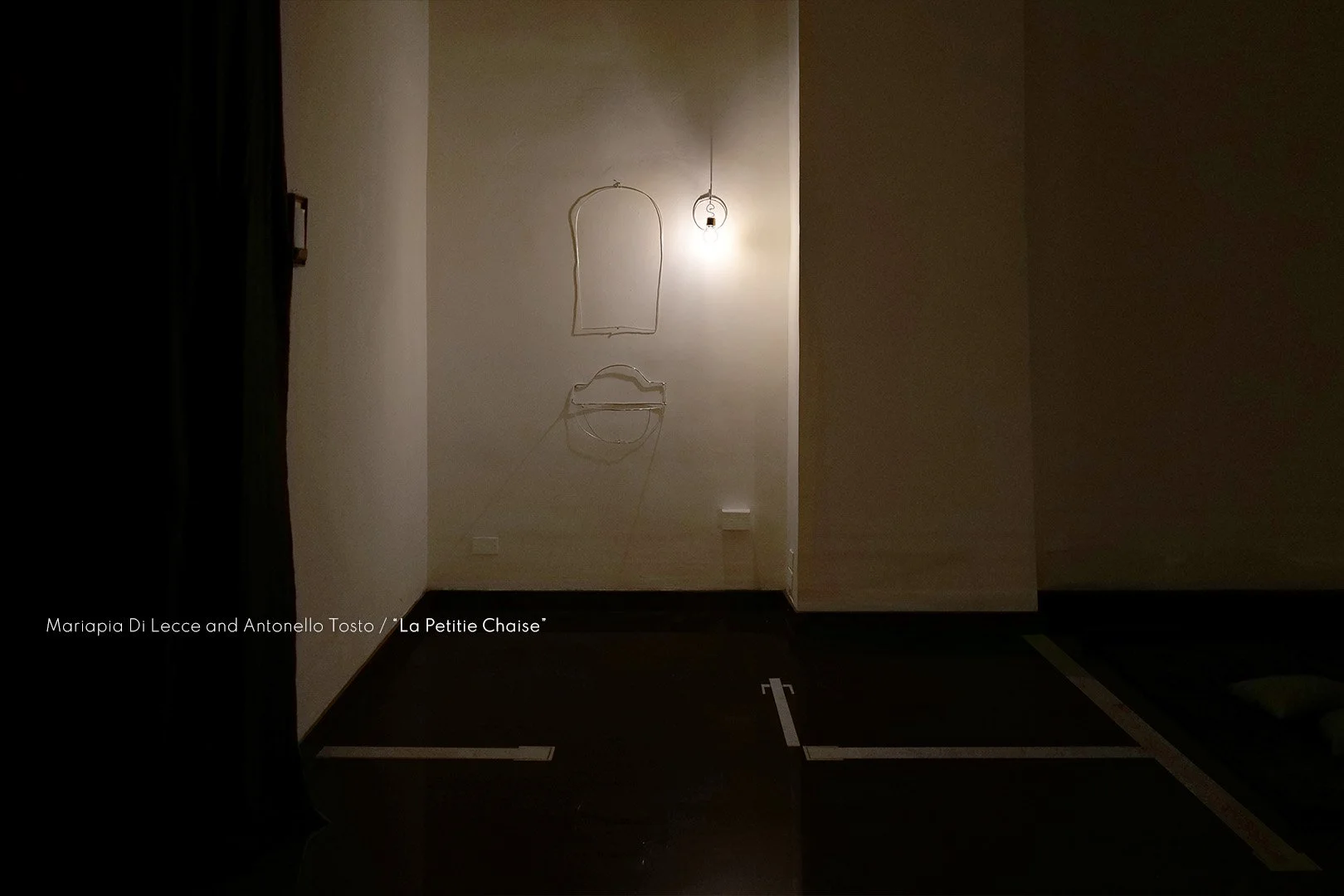
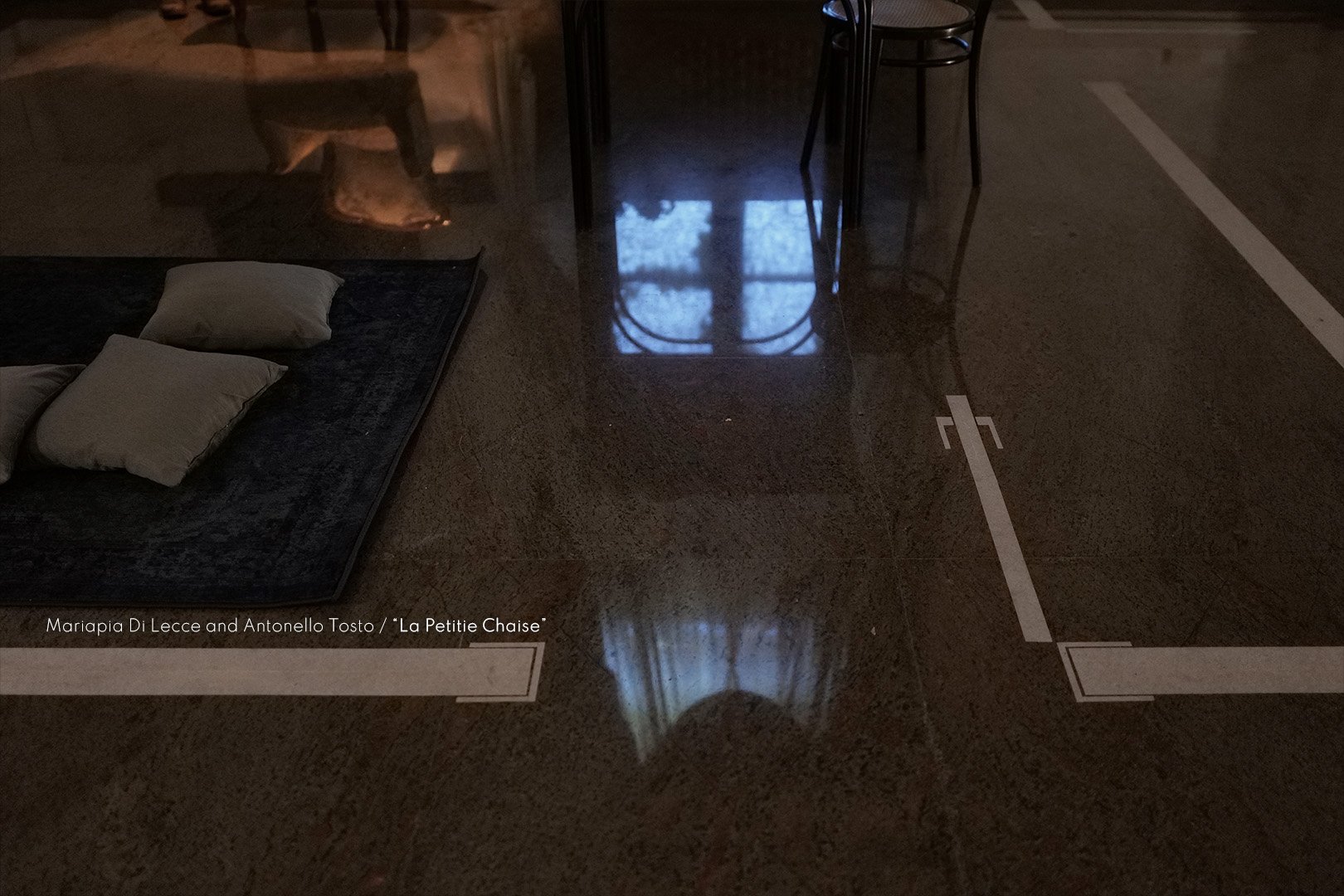
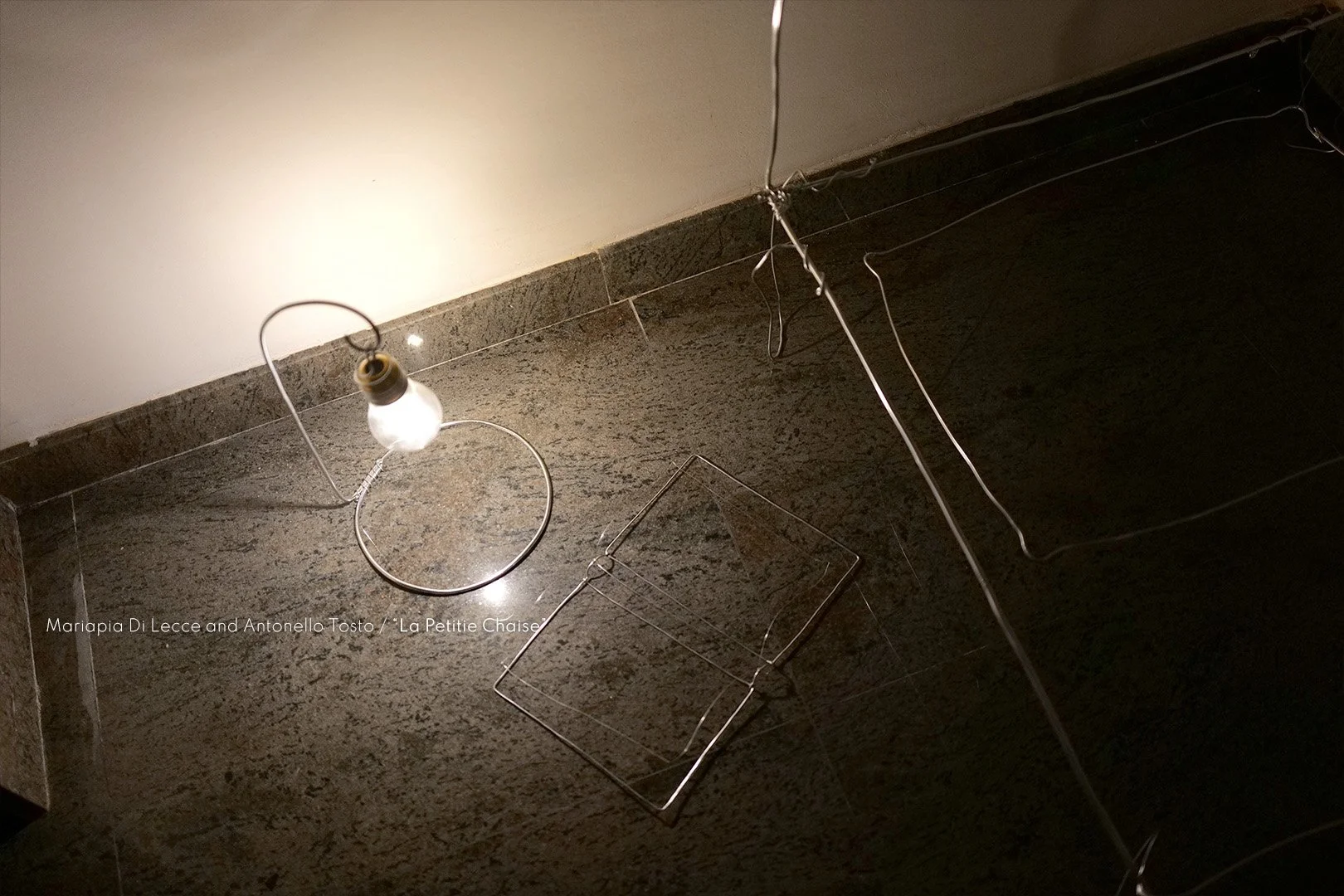
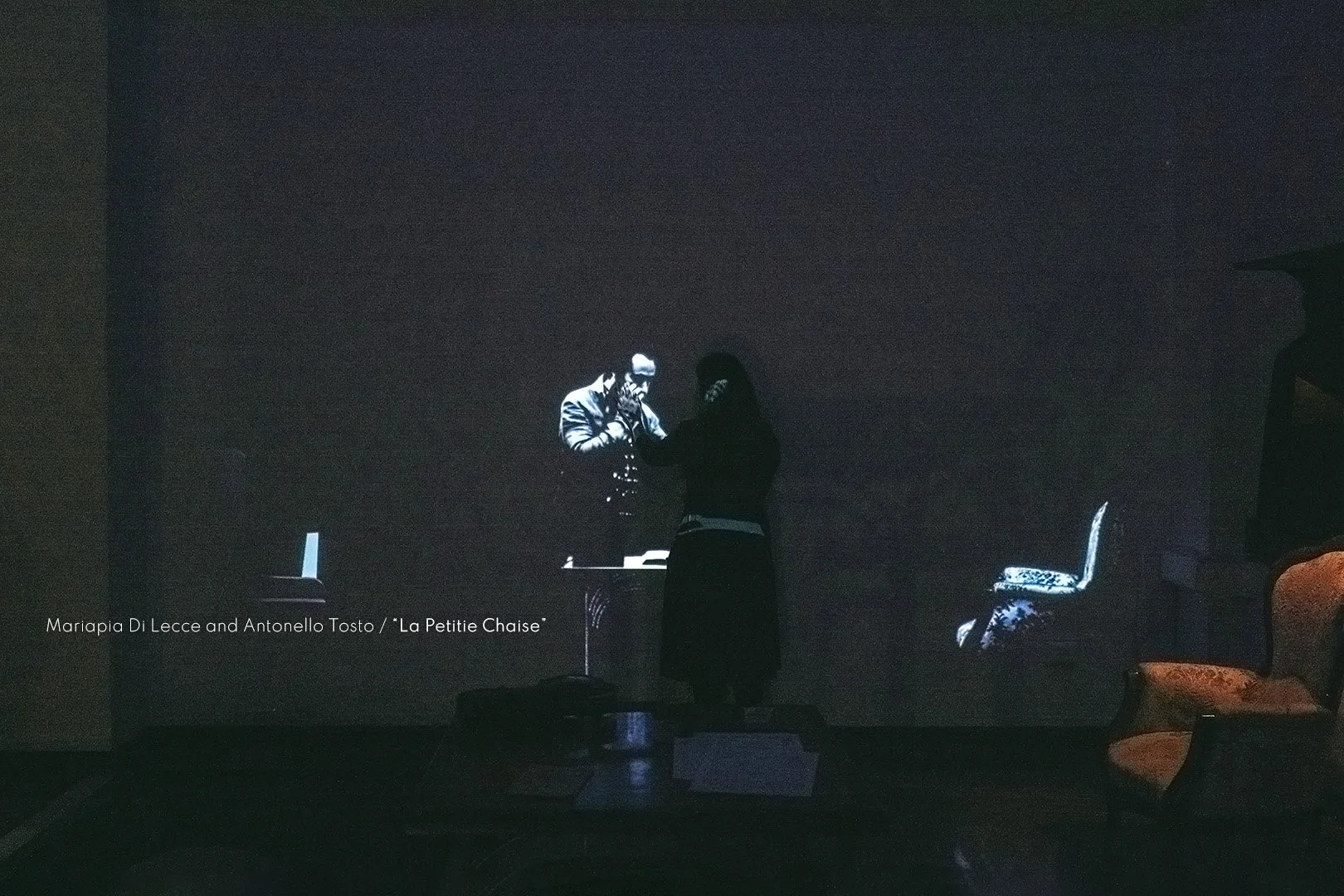
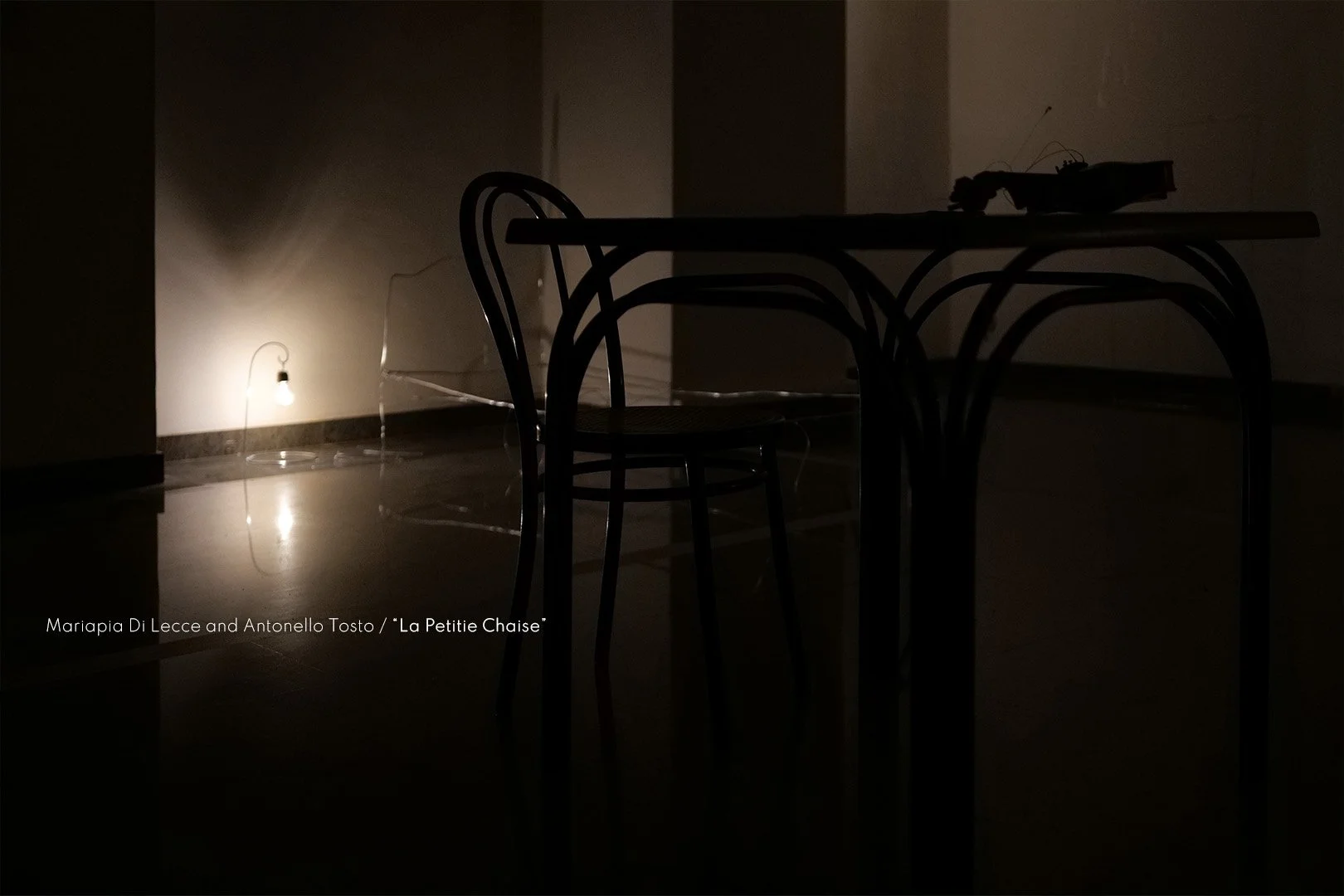
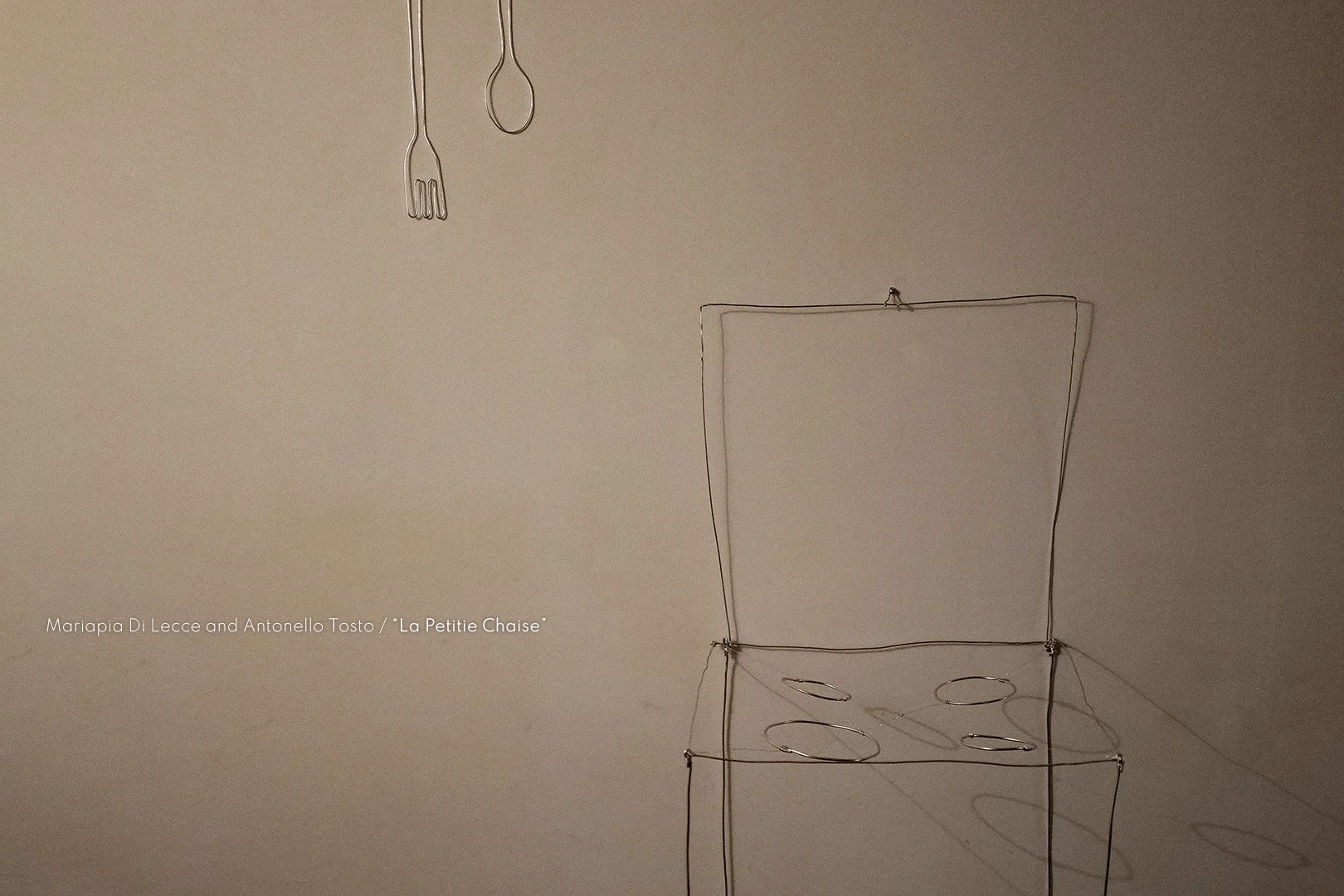
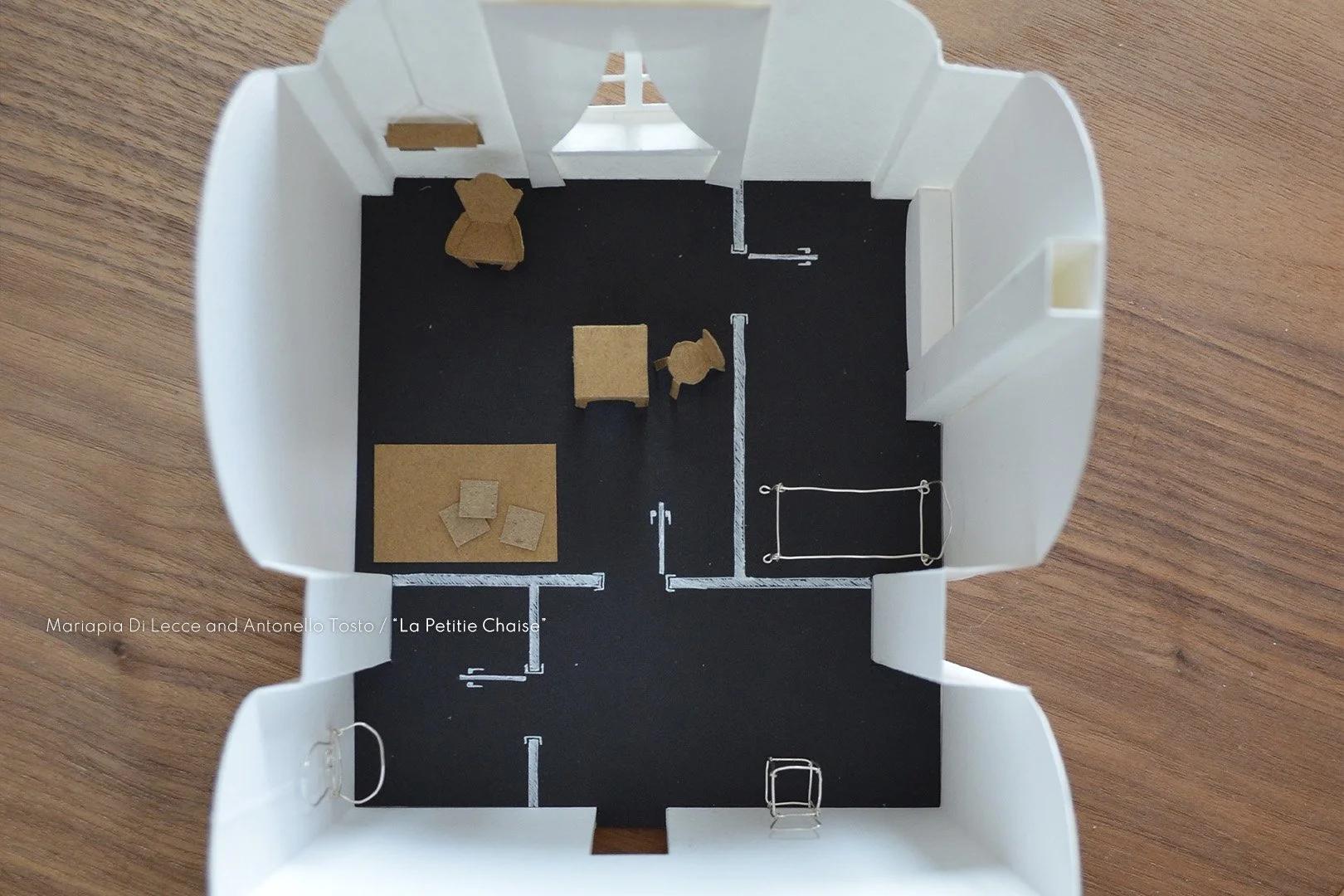
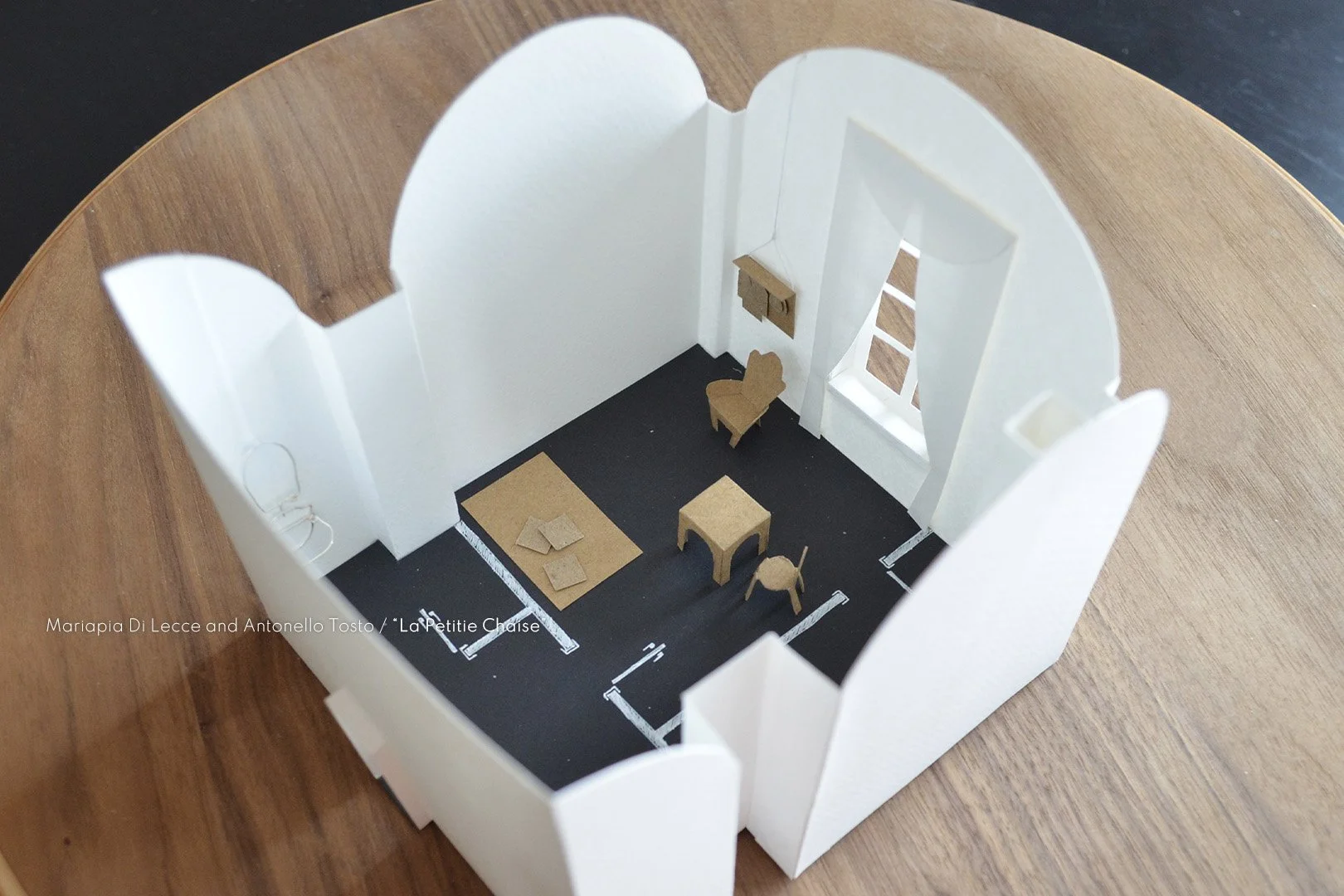
As soon as the visitor crosses the threshold of the room where the work is displayed, they are immediately enveloped in an ethereal atmosphere. Aluminum wire sculptures and dim lighting create a setting that makes them feel immersed in a personal memory. Within this space, a figure stands out, a shadow projected onto a wall, as if it were the presence of someone who lived in that place.
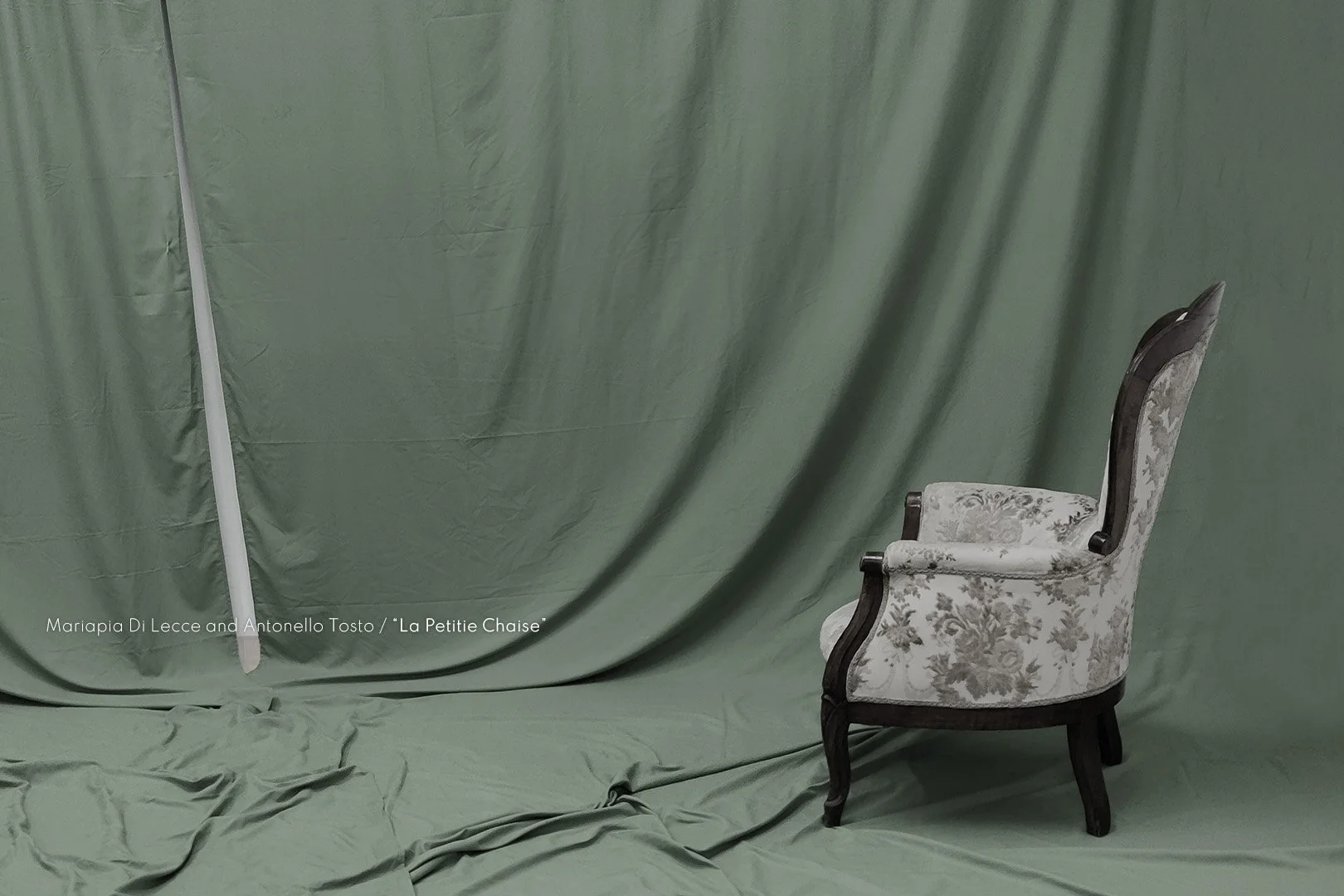
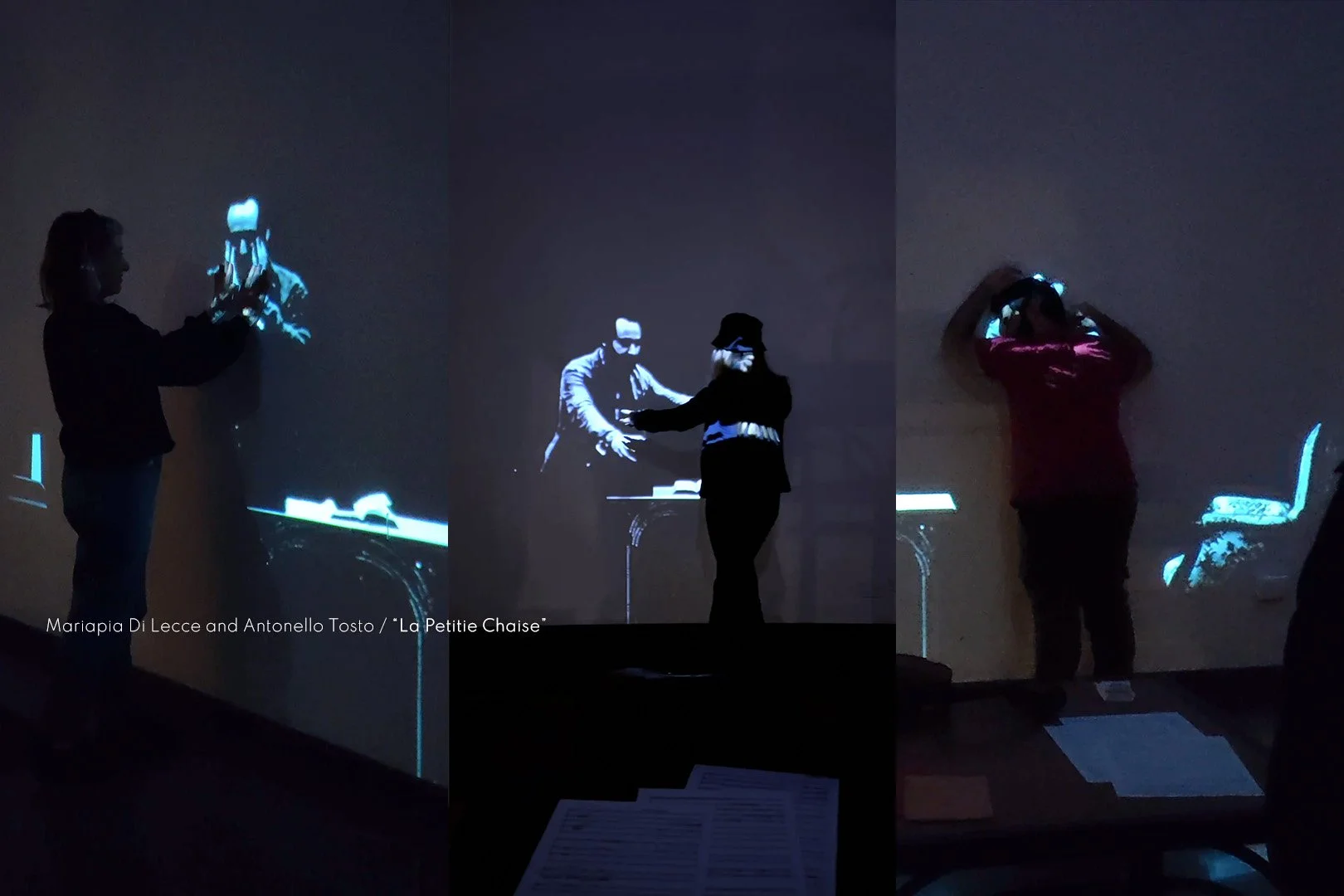
This figure, portrayed by a performer, actively interacts with the audience, while an adaptive soundtrack accompanies and amplifies the intensity of the interaction. Thus, a connection is created between tangible reality and the visitor's imagination, immersing them in a suspended dimension between the past and the present.
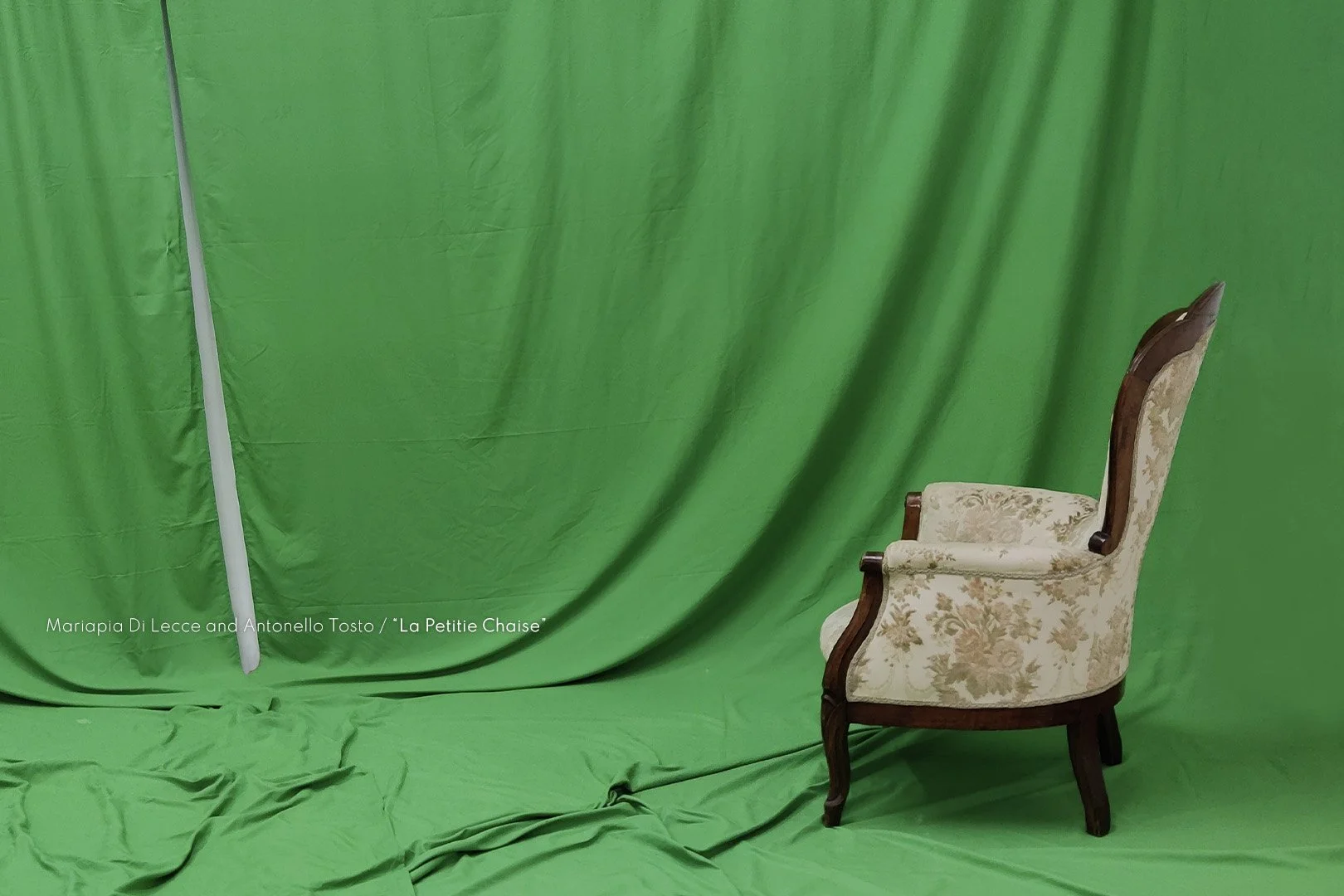
The experience provides a subtly nostalgic aroma in the initial phase, evoking feelings of affection and longing, before evolving into a phase that generates a sense of restlessness and unease. In the finale, the observer finds themselves observing within the two-dimensional projection, becoming an integral part of it.
A special thanks to clarinetists Umberto Galante and Bruno Friolo, who lent their talent and mastery for recording the clarinet parts of the soundtrack.
Gallery